|
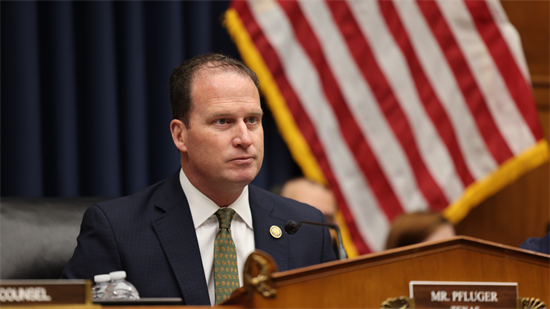
Read Rep. Pfluger's exchange with EPA Administrator Zeldin below:
Rep. Pfluger: Director, thank you for being here. Thank you for your service in riding the ship. My colleagues across the aisle claim that this EPA deregulatory actions are killing Americans. Couldn't be more false. The truth is actually the opposite, and what kills Americans is unaffordable energy in an unreliable electric grid, and that's exactly what the previous administration's EPA was delivering. The Biden EPA imposed trillions of dollars in regulatory costs and based on widely-inflated benefit calculations, assigning speculative dollar values to statistical lives while ignoring the real-world consequences of making energy unaffordable. 25 million American households have reported going without food or medicine to pay their energy bills. That is the human cost of regulatory excess. This EPA is doing what the agency is supposed to: rigorous, honest cost-benefit analysis, not rubber-stamping regulations that strangle reliable energy production while claiming to save lives on a spreadsheet. Affordable, reliable energy is the foundation of American health and safety, and Administrator Zeldin, your reforms are protecting Americans not by speculating about benefits, but by delivering them. And I'll get to Loper Bright. It's shameful that some of our colleagues have no idea what Loper Bright actually is and what it does. Thank you for the words that you had yesterday at a hearing here on Capitol Hill, and Loper Bright happened because of left-wing EPA overreach. That's exactly why we are here. And I'd like to ask you, how do you respond to the claim that faithfully reading the Clean Air Act as written somehow harms public health, and what actual authorities did Congress provide that this administration is now properly executing to benefit health?
Administrator Zeldin: Thank you for asking. For a long time, that Chevron Doctrine was in place. This got challenged. For those who aren't familiar with the Chevron Doctrine, basically, agency heads were looking at federal statute and would get creative. The statute wouldn't say that an agency head can't do something. So they'd say, Well, I guess that means that we can. We saw that used inside of the 2009 Endangerment Finding. If you read the Endangerment Finding throughout it, you'll see that discretion is being used just because it doesn't say we can't. Well, I guess that means we can. Well, the Supreme Court weighed in on Loper Bright and said, You can't do that anymore, that you have to follow the best reading of statute, the Major Questions Doctrine, which was also put forth by the Supreme Court in recent years in their cases, also says that an agency can impose trillions of dollars of regulation on their own. That's something that should have a debate and a vote in Congress. And what does that all mean when a member might be upset that we repeal the 2009 Endangerment Finding? Well, if you want an agency like the EPA to impose trillions of dollars of regulations and regulate the heck out of greenhouse gas emissions, it's really simple. Introduce a bill, debate it, get it passed, change the law, and we'll follow the law. The commitment that I made when I was nominated, the commitment that I reiterate here today, is that I will follow the best reading of the law, period.
Rep. Pfluger: Thank you for that. And I'll ask, can you provide an update regarding what actions the EPA is considering on the reconsideration of Quad Ob and c, which cost hundreds of billions of dollars in excess, and is another example of left-wing overreach?
Administrator Zeldin: Absolutely, this has been a multiple-phased process. We delayed a compliance deadline to allow us to fix the flaws with the OOOOb and OOOOc regulations. We just announced the second phase of the reconsideration. We're about to announce a third phase as soon as this week. We'll be putting out updated guidance to make sure that those who look at OOOOb, OOOOc, and have to comply with OOOOb understand exactly what that rule means and how the agency interprets it. This is a really important topic for a lot of our country, a lot of our economy. We want more reliable base load power. We want to unleash energy dominance. And OOOOb and OOOOc is a vehicle that was used to cause a lot of harm to much of this country, including a lot of Texas.
Rep. Pfluger: And it ignores the facts that between 2011 and 2020, methane emission intensity has dropped 70% just in the Permian Basin, while production of oil and gas has increased 320%. So it ignores those facts. I appreciate the work you've done, Administrator, to revisit and improve certain aspects of the AMAC implementation, and I've heard constructive feedback from stakeholders in Texas on those efforts. And at the same time, some have raised concerns about the HFC Management Rule, particularly in compliance challenges that it creates for refrigeration in grocery stores and other places. Can you give us whether the agent, can you give us an idea whether the agency is considering near-term reconsideration or adjustments of the HFC Management Rule? I'm sorry, I only have 10 seconds left.
Administrator Zeldin: So, on April 17, EPA sent over a proposal to the OMB. We are continuing to work on fixing the Technology Transition Rule. The impacts will be fixed by addressing this, the negative impacts of the Technology Transition Rule on grocery stores, on the semiconducting industry, on residents, and on residents across our country. We are going to fix it to the maximum extent allowed under the law.
Rep. Pfluger: Thank you, Director. My time has expired, and I yield back.
|