|
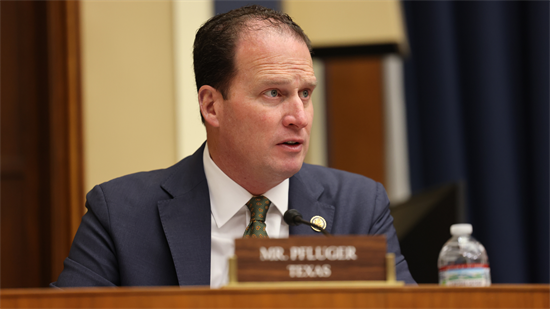
Read Rep. Pfluger's exchange with witnesses below:
Rep. Pfluger: Thank you, Mr. Chairman, and I thank the witnesses for being here. Some of my colleagues and many of you have pointed out today that technology has changed significantly over the past thirty years, and although the networks have advanced from copper lines and circuit-switched voice to broadband, streaming, and wireless, many of the regulations still remain outdated. I know we've been talking about this, and it underscores the gap between technological progress and regulatory adaptation. For example, in the 1996 [Telecommunications] Act was most effective, I believe, when Congress limited government intervention, removed the outdated rules, and allowed private investment and innovation to flourish. And I commend Chairman Carr and the FCC for the new “Delete, Delete, Delete” Initiative, which reviews all FCC rules and guidance documents to identify and remove unnecessary burdens. And I think that Congress should follow the FCC example and act promptly to systematically remove the obsolete and technology-specific mandates from our laws. And updating these statutes is essential to that.
Rep. Pfluger: Mr. Thierer, I'd like to ask you how Congress should update the framework of the 1996 Telecommunications Act to match the work that Chairman Carr is doing, such as deleting obsolete technology-specific rules and statutes and moving us towards a more technology-neutral solution? And what examples can you give us specifically on that?
Mr. Thierer: Thank you, Congressman, for that question. Absolutely agree with it, and what we need to do is move towards date-certain timetables for how we might go about sunsetting certain things. The “Delete, Delete, Delete” proceeding is a really good example of how we can try to move in that direction. We should have been doing that a long time ago. Instead, Congress and the Telecom Act delegated broad forbearance authority and said, well, we hope that the FCC will voluntarily just loosen the chains, and it hasn't worked out that way. Congress even required the agency to do reports on this. Never really mentioned much came out of that process. So I would encourage this committee to go back and actually provide some very clear timetables and a process like Michael Riley identified here about very specific types of things that you expect them to do.
Rep. Pfluger: So you’re saying we’re [Congress] the problem?
Mr. Thierer: When we agree on allocating vague authority, that is a serious problem.
Rep. Pfluger: I agree, as well as kind of moving in the same direction. Commissioner O'Rielly, what are the most important lessons from the successes and failures of the 1996 Telecommunications Act, and which ones of those should guide Congress as we update our laws to protect our national security, our economic security, and continue to innovate? What can you point to in that act that we should be looking at?
Commissioner O’Reilly: I outlined six in my testimony, but I'll give you just the two. I think one is, don't wait for a comprehensive reform. You can do it, whether it be piecemeal or smaller, bite-sized chunks, and you can really be effective in reframing how the commission looks at things. Two is, don't, and this is not about this commission, but you cannot rely on a commission to do the work that you expect it will deviate from whatever you thought it was going to. Everyone thought it was going to go here, and it went this way. And then provisions that are, years later, still reinterpreting provisions far, you know, in thirty years, reinterpreting provisions on a new creative mindset. So what I tell people and tell policymakers is, write in what you don't want the commission to do, not do X, do not do Y, you don't have the authority to do Z. Be very clear what you cannot do is really important.
Rep. Pfluger: Take some lessons from the Chevron deference case as well. Lastly, I've introduced the bipartisan Keep It Moving Act to establish clear timelines for the FCC merger review process, and this act would require a full commission vote to deny an application, ensuring the critical decisions are made transparently and don't create unnecessary barriers. And so, go to Chip Pickering, in your view, how would legislation like the Keep It Moving Act set the right framework and provide market certainty and predictability?
Chip Pickering: Whereas I keep saying, we're in a build period, there's going to be a heightened time of mergers and acquisitions as the scope and scale to build the big infrastructure that's going on. So the faster that we can go through merger reviews, the more transparent, and we welcome legislative initiative on your part, and whether it's denial and approval for a full vote or having a dissenting debate, the better we have an open, transparent process with a shot clock is the best way to go.
Rep. Pfluger: I mean, this highlights, I think, the need for bipartisanship, and I hope we'll be able to achieve that. You know, even in an environment that is politically tough, you've brought together a hearing that really highlights our competition with China, our economic competition, the stakes are really high, and I hope that both sides can really come to the table on this. I yield back.
|