Pfluger Fly-By
Subscribe to my newsletter to get the latest news and updates from my office.

Press Releases
Rep. Pfluger Op-Ed: Our Air Force is stretched dangerously thin. Here's how to revamp it.
Washington,
March 11, 2026
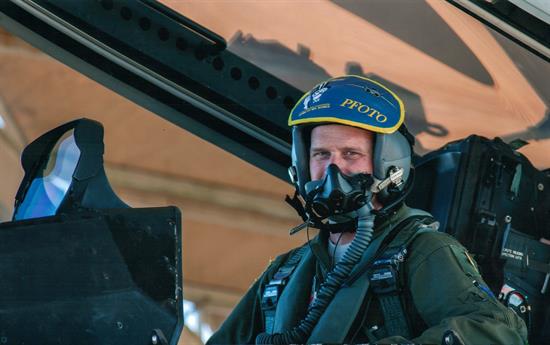
WASHINGTON, DC — In his Washington Post op-ed today, Congressman August Pfluger (TX-11) warns that while our Air Force remains unmatched in capability, decades of underinvestment have stretched it dangerously thin at a critical geopolitical moment. In the piece, he highlights that the Air Force currently operates with the oldest aircraft and smallest force in its history, and that the ongoing conflict in Iran will severely test and strain our aircraft availability and munitions stockpiles. As he says in the piece, "Over the past year, American airpower has conducted three complex integrated missions involving fighters, bombers, refuelers, intelligence and cyber forces: Operation Midnight Hammer in Iran, Operation Absolute Resolve in Venezuela, and Operation Epic Fury, currently unfolding, once again, in Iran. No other military on earth could have executed these missions at similar scale or with comparable precision. And yet the uncomfortable truth is that our system should be blinking red. We are achieving extraordinary results, but our force and fleet are wearing out faster than they are being replaced." Rep. Pfluger later goes on to offer his four solutions for how the United States must triage and refocus investments in American Airpower. He concludes with, "As I retire after two decades in uniform, I remain convinced that the U.S. still possesses the world’s finest air force, and that its best days lie ahead. I may be leaving the force, but I am still part of the mission as one of 17 Air Force veterans in Congress. We have started to move in the right direction. Now we must finish the job." Rep. Pfluger retired as a Colonel in the U.S. Air Force on February 1, 2026, after more than two decades of service. He graduated from the U.S. Air Force Academy in 2000 and spent his active-duty career flying the F-15C and F-22, including many combat missions across the Middle East, before joining the Air Force Reserve in 2020. Rep. Pfluger now serves as Chairman of the U.S. Air Force Academy Board of Visitors, where he works to strengthen the Academy and develop the next generation of military leaders. Read the full op-ed below or in the Washington Post by clicking here. “Put our people first. ... Emphasize readiness. ... Continue our carefully balanced, time-phased modernization program.” Those words come from the 2000 Air Force Posture Statement, written before 9/11, before the emergence of the Islamic State, and before two decades of war in Iraq and Afghanistan. Yet nearly 30 years later, contrary to those imperatives, chronic underinvestment has left the Air Force dangerously thin in aircraft, munitions, and trained crews. It’s a situation that puts our national security at risk and calls for a major revamp — ASAP. I graduated from the Air Force Academy in 2000 and spent the next two decades flying the F-15 and F-22, including many combat missions in the Middle East. I joined an Air Force that had decisively shaped the post-Cold War world. When I retired in February, I left one that remains unmatched in capability but has the oldest aircraft and the smallest force in its history. Over the past year, American airpower has conducted three complex integrated missions involving fighters, bombers, refuelers, intelligence, and cyber forces: Operation Midnight Hammer in Iran, Operation Absolute Resolve in Venezuela, and Operation Epic Fury, currently unfolding, once again, in Iran. No other military on earth could have executed these missions at similar scale or with comparable precision. And yet the uncomfortable truth is that our system should be blinking red. We are achieving extraordinary results, but our force and fleet are wearing out faster than they are being replaced. This is even more alarming as conflict intensifies in Iran. Sustained strike operations will severely test aircraft availability and munitions stockpiles, and that strain will grow every day. This is where decades of underinvestment have become a serious operational risk. The average age of Air Force aircraft has nearly tripled since the Persian Gulf War. Ten aircraft types still in service first flew more than 50 years ago. Even the advanced F-22 first flew in 1997. Operational training has followed the same downward trajectory. In 1991, fighter pilots averaged roughly 22 flight hours per month. Today, many struggle to reach half that. Combat support manpower has also been cut to the bone, and when airmen responsible for executing our most critical missions are over-tasked and undertrained, readiness — and therefore national security — suffers. Recruiting challenges have compounded the problem. Until recently, the military was experiencing a historic recruitment crisis. Excessive bureaucracy and misplaced emphasis on diversity, equity, and inclusion initiatives were sending the wrong message to young Americans who wanted to serve their country as warfighters. Budget shortfalls and misapplication of strategic resources have also contributed. For two decades after 9/11, the Air Force received roughly $65 billion less per year than the Army. Meanwhile, it has sustained 24/7 nuclear command and control, intercontinental ballistic missiles, and nuclear-capable bombers while attempting to modernize through strategic programs such as Sentinel, the Long Range Stand Off Weapon, and the Survivable Airborne Operations Center. That is a staggering load for a force already stretched thin. The United States once excelled at building ahead of the threat. We assumed the next conflict would demand more than the last. Somewhere along the way, that changed, and I watched as the country was tied into ground wars in Iraq and Afghanistan and neglected investment in the Air Force despite ample warnings of the need for airpower. Preparing warfighters and building next-generation aircraft became secondary to managing institutions. So how do we triage and revamp our once-dominant Air Force? First, invest directly in readiness. That means upping flight-hour requirements, rebuilding munitions inventories, increasing squadron capacity, revitalizing combat support career fields, and fully investing in Weapon System Sustainment funding to be mission-capable on Day 1. Second, accelerate modernization with stable, multiyear procurement. Modern warfare increasingly begins and ends in the air. Increasing F-35 procurement and expanding production of next-generation combat aircraft such as the F-47 and B-21 Raider is essential to maintaining industrial capacity and air dominance. Third, require transparent readiness metrics. Congress must be regularly presented with reliable and consistent data on fleet health. High-tempo deployments increase aircraft wear and reduce training opportunities for air crew. Without sustained investment from Congress, the readiness gap only widens. Finally, rebuild the pipeline of warfighters. We must strengthen the service academies, expand ROTC programs, modernize talent management, and remove unnecessary barriers that drive capable Americans away from military service. The recent historic investments in our military and a renewed focus on lethality are steps in the right direction. Restoring the warrior ethos and the elimination of DEI have also sent recruitment numbers soaring. But readiness cannot be a pendulum that swings with each administration. National defense requires consistency, clarity, and long-term commitment. The 2000 Posture Statement described the Air Force as “a combat-proven, mission-focused, decisive fighting force.” Those words still ring true because of the incredible men and women who wear the uniform. But people alone cannot compensate indefinitely for aging equipment and decades of underinvestment. |