|
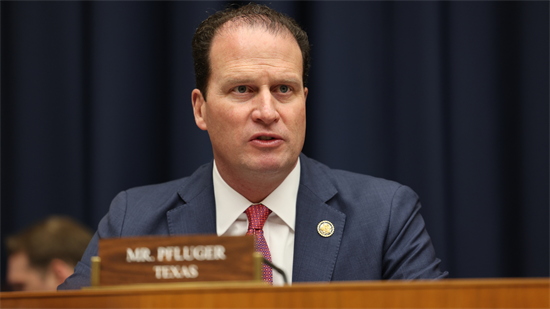
Read highlights from the exchange between Rep. Pfluger and Mr. Roberti here:
Rep. Pfluger: Thank you, Mr. Chairman, and just a note. It is still a discussion draft, and there's plenty of time to make it bipartisan. It should be. Pipelines are the safest delivery method in the world. We appreciate what you're doing. In a state like Texas, we have almost half a million miles of pipeline that transport the vast majority of our oil, natural gas, CO2, and other things, and our national security depends on that. We're seeing that play out with the situation in Iran. We need to continue to build out this network because it is the safest network. So, Administrator, thank you. The ERCOT grid relies heavily on natural gas-fired generation to meet the peak demand and maintain grid stability and adequate pipeline capacity, and timely infrastructure development is directly tied to reliability and affordability. But can you mention how the reauthorization of PHMSA helps ensure that pipeline infrastructure can be developed safely and efficiently to improve that reliability and the affordability for every American family?
Administrator Roberti: Yes, I believe in the value of growing the nation's pipelines because of how safe they are. We stand ready to assist in reviewing the plans and designs for pipelines. We don't permit them, but we work very cooperatively to assist and make sure that the design, the construction, and the operation of those pipelines will be safe and in accordance with our Code of Federal Regulations. That, to me, having clarity, having understandable regulations, and being a good government agency that is going to hold operators accountable if they fail to meet the code, I think, goes a long way to supporting the development of pipelines.
Rep. Pfluger: Well, that's why this is so important, because that predictability is important for them to know what those regulations are, to meet them, and they have every intent to. I would invite my colleagues, especially on the other side of the aisle, to come visit my district and see exactly what these operators are doing, not only to comply, but above and beyond. Enhanced oil recovery is very important right now. It depends on CO2. There are many companies that have championed that technology, and will PHMSA modernize the safety regulations for CO2, specifically in those pipelines, to ensure that they're workable for operators, understandable, and that they can also be safe as well?
Administrator Roberti: Yes, and we have an outstanding gaseous CO2 mandate. The current regulations haven't been updated for the supercritical. I think we are going to move on that. We're going to try to update those regulations. We're not going to write a whole bunch of regulations for hypothetical events. We're going to try to focus on industry consensus standards. Look at what meets a good balance between costs and benefit and that is on the list of mandates that I want to see done while I am here as administrator.
Rep. Pfluger: How will a reauthorization strengthen the coordination between state agencies and work better to achieve stated objectives that we've been talking about in this hearing today?
Administrator Roberti: So the grant money that you give us for the state based grants, and the one call, and the excavation damage prevention grants are really good, because not only does it create a partnership with the states, it's an accountability tool where we evaluate how states are doing on the various efforts, whether it is to enforce the code for intrastate pipeline operators, or in some instances, like Washington, if it's an interstate agent, where they do the inspections for interstate as well as interstate but, but those grants and that partnership, I think, is a great example of cooperative federalism. I have a lot of trust in that approach, and you know, I know everybody needs more money. We try to give the states as much as we can. We fund up to eight percent of their programs. We might be striking a level that's a bit lower than that right now with the current funding.
Rep. Pfluger: As PHMSA shifts towards more of a data-driven approach and a risk-based oversight model, does the agency intend to potentially revisit how gas gathering lines are classified, and specifically for the inspection and compliance resources that are being used?
Administrator Roberti: So, for the gas gathering lines, the current pipeline safety law gives the Secretary this discretion. It's a little convoluted if you read it. In fact, I went to talk to my chief counsel this morning about reading that language. And if you want to get into a like, you know, like, twirl your head a little bit, you look at that language. It's in the bill. But I digress.
|