Skip to Content

Press Releases

Rep. Pfluger's Permitting Reform Bill Advances Through Full Committee

WASHINGTON, D.C. — Congressman August Pfluger (TX-11) continues to lead the charge for meaningful permitting reform in Congress. His legislation to rein in government overreach and protect states, energy producers, and manufacturers advanced through the full House Energy and Commerce Committee.

The "Foreign Emissions and Nonattainment Clarification for Economic Stability (FENCES) Act" will bring long-overdue clarity and fairness standards to the Clean Air Act by ensuring states are not unfairly penalized for emissions originating outside the United States. The bill also protects producers from costly and unnecessary compliance requirements caused by factors beyond their control, such as foreign wildfires or dust storms, while upholding environmental standards under the Clean Air Act. 

Read more about this legislation in E&E News, here.

Text of the legislation is available here.

Rep. Pfluger introduced the FENCES Act in December 2025. Read the original press release and full background on this legislation here.

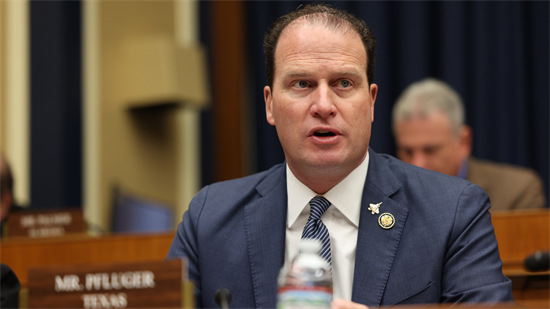
Watch Rep. Pfluger's remarks in favor of his legislation during the markup here or by clicking the image below.

Read his remarks as delivered below:

Thank you, Mr. Chairman, and I am speaking in favor of H.R. 6409 The Foreign Emissions and Nonattainment Clarification for Economic Stability Act, also known as the Fences Act.

States can be pushed into non-attainment because of pollution that they do not control and cannot prevent. Smoke from Canadian wildfires, emissions drifting across the southern border, or other foreign sources can overwhelm local air quality readings, even when states are fully compliant and acting in good faith.

The Clean Air Act has long acknowledged this problem. Congress intentionally allowed states to account for foreign emissions when those emissions interfere with attainment. That balance was disrupted when EPA guidance under the last administration sharply narrowed what counts as foreign emissions, limiting relief to certain human-caused sources, while excluding events like wildfires. That distinction is arbitrary and unworkable. States cannot regulate another country, and they certainly cannot regulate natural disasters.

The FENCES Act corrects that mistake. It clarifies that all foreign emissions, whether natural or human-caused, must be excluded when the EPA makes non-attainment determinations or reviews new source permits. Just as necessary, the bill allows states to raise these issues earlier in the process, rather than after years of planning and investment when the consequences are most severe.

In the Permian Basin, we saw how even the possibility of a non-attainment designation can create uncertainty, and that uncertainty affects permitting, timelines, capital planning, and long-term investment decisions for both energy producers and local communities. When the stakes are that high, the EPA needs to get the analysis right. In fact, Dr. Earthea Nance, who was the region 6 EPA director under President Biden, came to the Permian Basin and visited, and I've invited colleagues from the other side of the aisle to also do the same. She commented during that visit about how much the emissions had been reduced, not knowing all the procedures, techniques, data, and technology that had been put in place to reduce those emissions.

It's not just my constituents, but it's American workers and businesses that should not face regulatory penalties for polluting, pollution, or originating outside of our borders in uncontrollable natural events. That is not environmental accountability. It is regulatory overreach, and I urge my colleagues to support this bill and yield back.