|
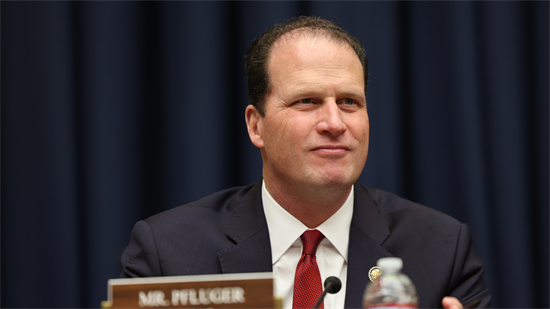
Read highlights of Rep. Pfluger's opening remarks on his visit to the Natura Nuclear Reactor at Abilene Christian University:
I'm going to bring up a project in Abilene, Texas, that you're probably aware of, with Natura Resources leading an effort to build a reactor on the campus of Abilene Christian University, where I've been, and I visited. They've received formal commitments from the Department of Energy for both HALEU and the specialized salt required for the reactor's operation. Natura has been selected to be a part of the DOE Reactor Pilot program, and the facility there is completely built.
As I mentioned, I just visited a couple of months ago. It's very impressive. The State of Texas is also partnering and supplying $120 million, but these milestones confirm that the fuel supply, the regulatory approval, and the project readiness are not just speculative. They're actually happening, and they're well ahead and doing very, very well. I think the remaining obstacle is the processing and the transportation of the materials, which is inherently a governmental function. And we appreciate the Idaho National Laboratories' (INL) help in this, so the reactor will be built this year.
Read Rep. Pfluger's exchanges with the witnesses:
Rep. Pfluger: Dr. Wagner, how can INL best support this project and the goals of the administration to get the required products, including HALEU, to Abilene in a timely manner to complete the project?
Dr. Wagner: So thank you for the question and the partnership there. I would say that the first thing that we have to address, and that is being addressed, is the actual fundamental material that is made into a fuel form. The HALEU that I think you referred to, that's a fundamental federal government decision on who gets what and how much and so forth. Where Idaho National Laboratory plays the role is that we have some of that material on behalf of the Department of Energy, and then we can help developers move that material from its raw form into the fuel form that the reactor needs. And so that's the area that we can definitely help with.
Rep. Pfluger: I think the frustration has been that this is a privately funded enterprise. DOE came to this group and said, Will you do this? They said, Sure. And then they get all the way there, and it's like they're at the finish line. They want to, they want to get this done, but the government needs to finish their piece of this. So we recognize that the availability of the facilities and the equipment for processing materials is limited, but if there is a prioritization, and the use of the INL infrastructure is prioritized for this project, it sounds like that's going to speed it up. What's the best way for congressional offices to both stay informed and to make sure that we continue, because they're well ahead of any other program of this type?
Dr. Wagner: In terms of engagement on access to the materials and prioritization of resources and facilities at the laboratory, that engagement is best directed towards the Department of Energy as a laboratory. I'm a Department of Energy Laboratory, but I'm not a federal employee, and I don't make those federal government decisions. We take our direction from the Department of Energy.
Rep. Pfluger: I think what we recognize in this hearing is very significant, because there's a race, and that race is not just for AI, although that is extremely important, but the race is for an assortment of energy needs that demand is going to continue to increase at an exponential rate. And that kind of leads me to a question for Mr. Williams. Which utilities are seeing unprecedented load growth for data centers, and how much regulatory certainty is needed before you can commit nuclear resources to continue to serve that load at scale?
Mr. Williams: Thank you for that question, Congressman. So we are seeing tremendous low growth, especially in the southeast, and Southern Company is planning to meet that commitment. We believe that preserving the option for new nuclear generation is important for our customers as we look for that. But we've got to mitigate the risks that are associated with that. We laid those out in our testimony today, and that's our focus on how to mitigate those risks, working through public, private partnerships, working with the customers, those data center customers, and making sure that we can do that. Because what we want to do is, when we bring that data center online, we want to put downward pressure on rates for the rest of our customers. That's the model that we've established in Georgia. That's what we want to continue to do, and so that's what we're focused on.
Rep. Pfluger: Well, thank you. We have to compete at the speed of commerce, and right now we're competing at the speed of government, which is abysmal. And Dr. Wagner, what's the biggest economic driver of nuclear waste and recycling?
Dr. Wagner: I would say that mining uranium out of the ground is cheaper. Also, that's the economic driver. The other aspect, I think, is that this committee could consider is the Nuclear Waste Policy Act and whether or not there are incentives with respect to recycling.
Rep. Pfluger: That's kind of what my follow-up is. What do you know that will provide a model of sustainability, so we can continue to use and recycle and use the materials that we know are valuable?
Dr. Wagner: There are a number of aspects to that question, but I would say the Nuclear Waste Policy Act did not envision a future of recycling. It had laid out standard contracts with utilities where the Department of Energy would take the material, and so that is the model under the Nuclear Waste Policy Act. If we would like to change that model, then I think we need to go back and revisit that.
|